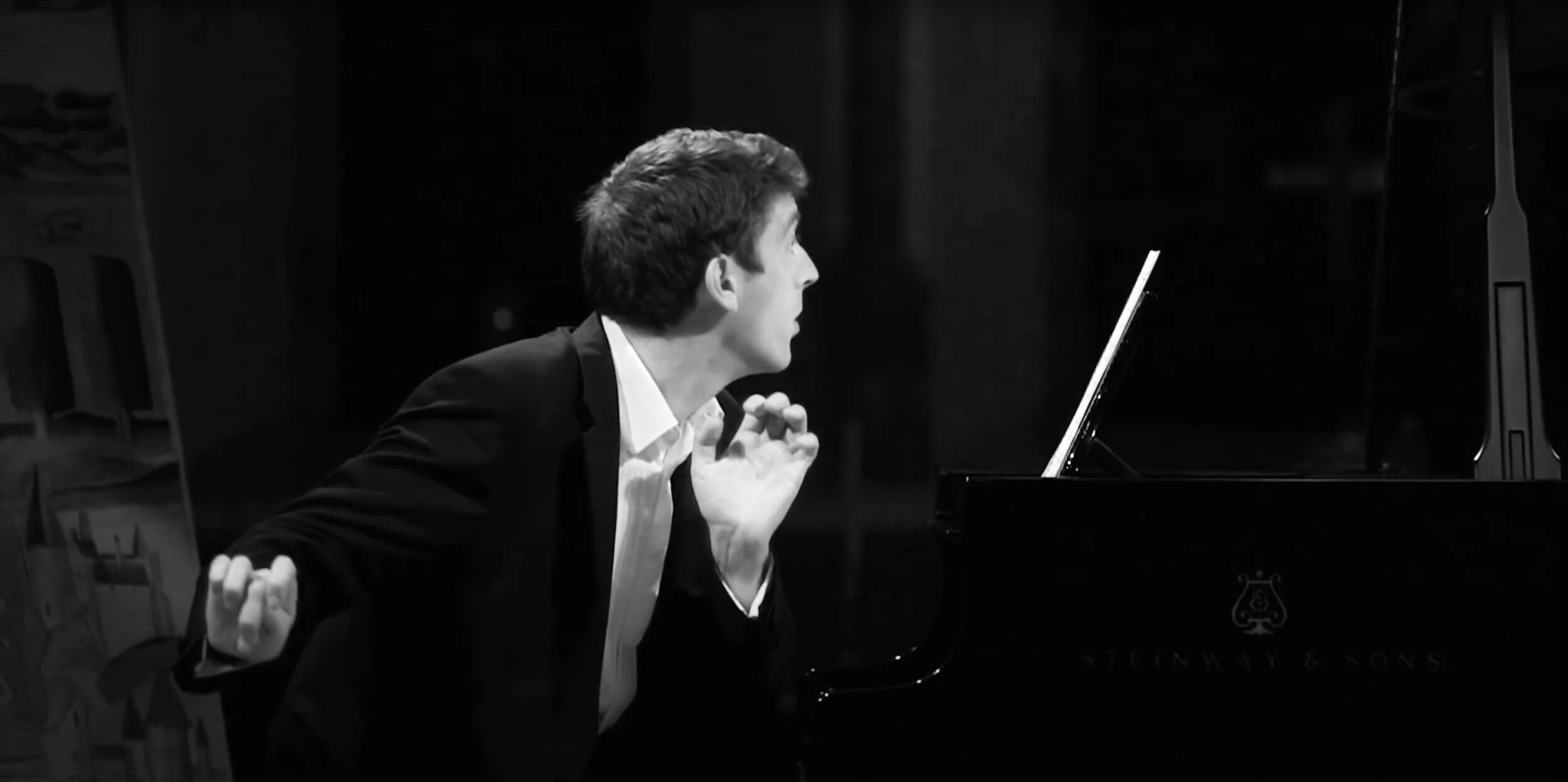
Artistic Work
12 PRELUDES FOR 12 PIANISTS
“A Child’s Secret Treasure Chest”
(2024 - 2025)
Instrumentation
For Solo Piano
Duration
75 min
Composed by Sam Perkin
Supported by The Arts Council of Ireland Music Bursary Award
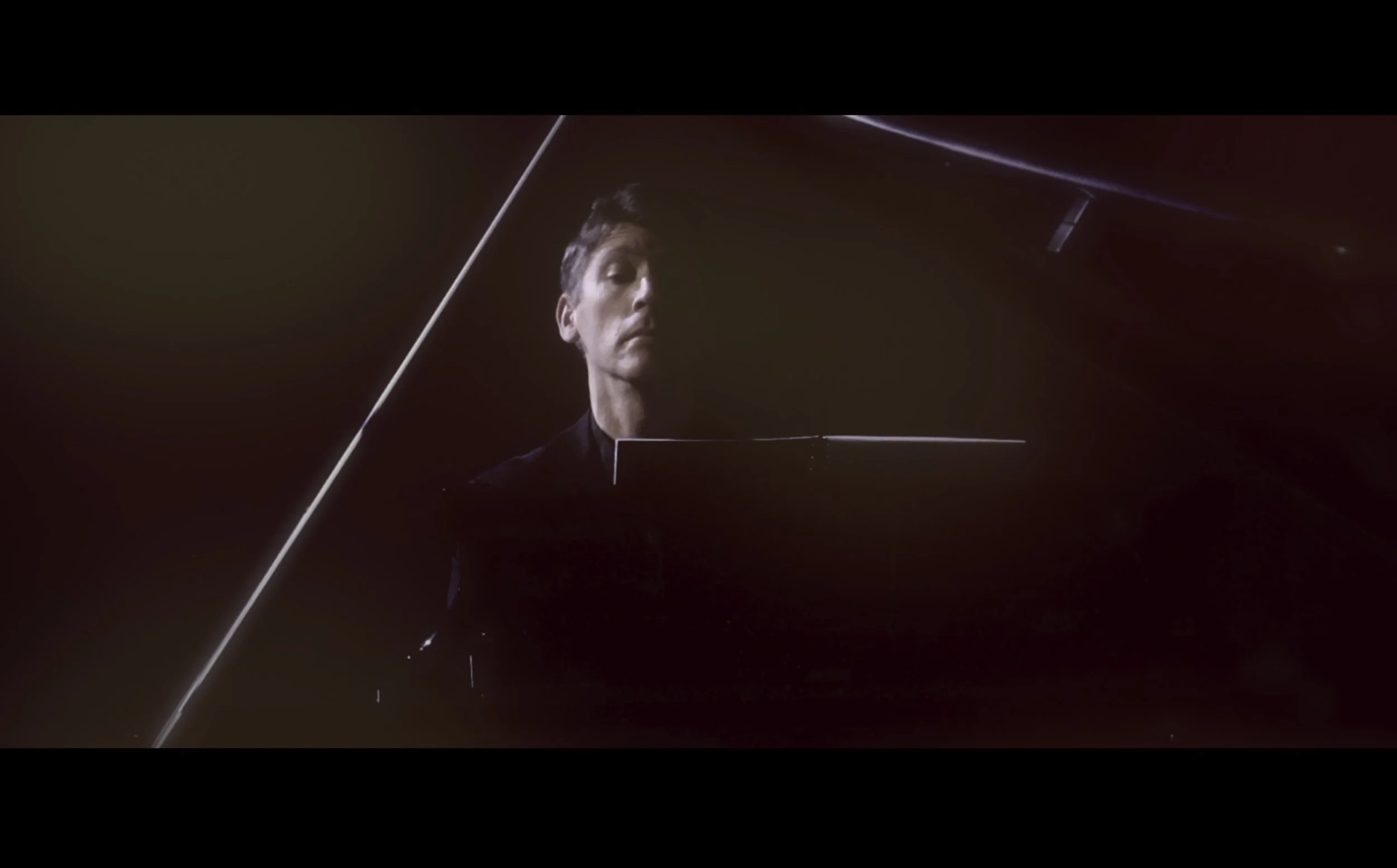
About
This is the child’s secret treasure chest. A box of wonder. Fragile. Precious. This suite of 12 Preludes for 12 Pianists for solo piano is an intensely personal set of pieces inspired by and dedicated to childhood. The ideas that were used for each of these pieces had been kept safe for a very long time. I only let them see the light of day in 2024 and 2025 when I composed this heartfelt set of preludes. Composed for the following 12 Pianists, half from Ireland and half other countries: Nathalia Milstein (FRANCE), Finghin Collins (IRELAND), Hugh Tinney (IRELAND), Izumi Kimura (IRELAND / JAPAN), Eliza McCarthy (USA / UK), Cormac McCarthy (IRELAND), Ryan Molloy (IRELAND), Isabelle O’Connell (IRELAND / USA), Máire Carroll (IRELAND), Fiachra Garvey (IRELAND), James McVinnie (UK) & Vicky Chow (USA). Throughout the collection we explore wonder, innocence, freedom, serenity, love, discovery, beauty, delight, perfection, the feeling of genuine aliveness, ecstasy, and the end of innocence.
More Info
LE MONDE DES ADULTES
Clara Haskil International Piano Competition
(2025)
Instrumentation
For Solo Piano
Duration
7 min
About
A very personal work which asks pianist to convey that we do not have to lose our inner-child (with its genuine sense of wonder). The work is dedicated to Maurice Ravel.
Programme Note
In this dreamlike journey, a child is lost at sea in a vast and enchanted ocean. On the horizon, we gradually hear the tolling bells of the adult world, the resounding bells of time, and the chiming bells of suffering. Despite all these elemental forces, the innocence of the world of the child, being innately more powerful and assured, will emerge once again in our hearts and win the day, forever and ever. Dedicated to Maurice Ravel.
Note de Programme
Dans ce voyage onirique, un enfant part à la dérive sur un océan vaste et envoûtant. À l'horizon, les coups de cloches du monde des adultes se font entendre, puis les cloches du temps, et finalement les cloches de la souffrance. Malgré toutes ses forces naturelles, l’innocence incommensurablement plus puissante du monde de l’enfant, avec sa confiance innée, spontanée et intuitive, finit par réémerger et l’emporter à la fin de la pièce pour rester dans nos cœurs, pour toujours et à jamais. Dédié à Maurice Ravel.
Commissioned By
Clara Haskil International Piano Competition, Switzerland

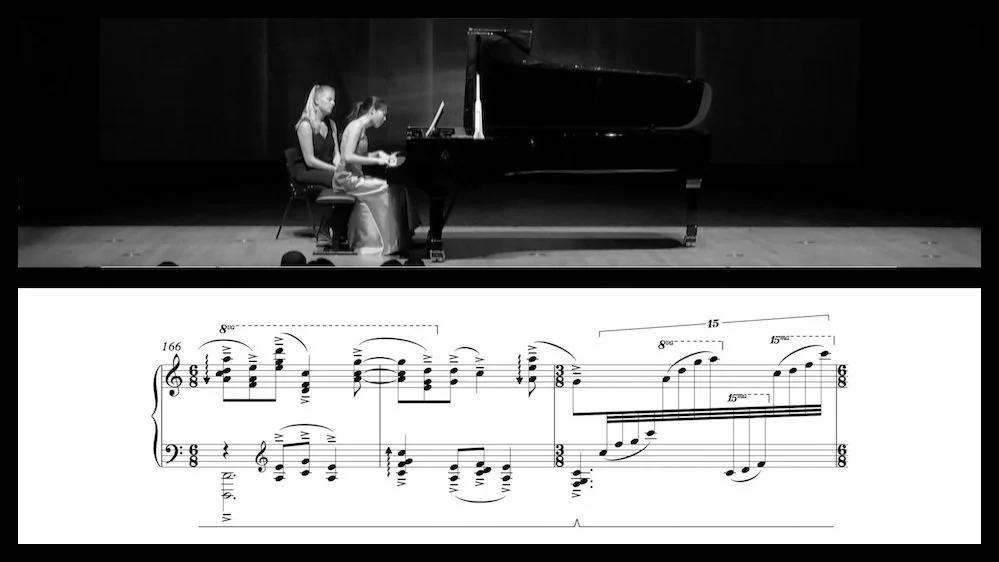
THE DUERDEN-MARGULIS FANTASIA
(2026)
Instrumentation
For Two Double Basses & Piano
Duration
16 min
Dedicated To
Will Duerden, Daniil Margulis & Svitlana Kosenko
Commissioned By
Daphne & George Burnett for Buxton International Festival
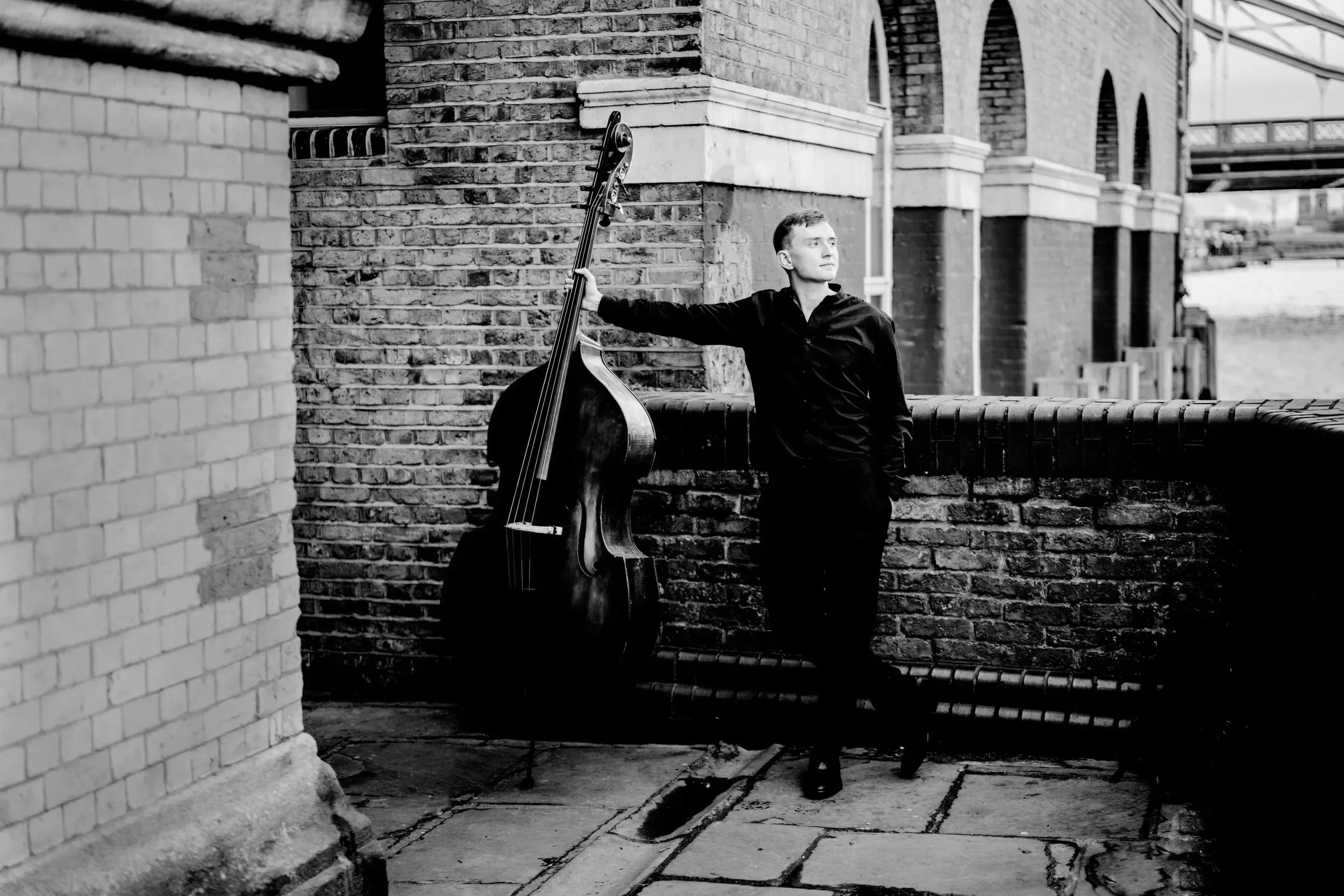
“The Duerden-Margulis Fantasia” takes us on a nautical journey to the far plains of our imagination. As the two double basses sing like swans above the piano’s buoyant harmonies, we witness a duet of great beauty. We then land on a remote underwater island and revel in its delights. From this island of blue, we are suddenly overwhelmed by a storm from our past and we think it is too much for us. At the end of the day though, breathing together, we find ourselves seaworthy and can now explore the depths with freedom.
Part 1. Saltwater Synthesis
Part 2. Aquatic Epiphanies
Part 3. Storm From The Past
Part 4. Breathing Together
VISUALIZATION
Music Biennale Zagreb, Croatia
(2024)
Instrumentation
For String Orchestra
Special Version By
Dejana Sekulić
Performance At
Opening Launch Concert
Music Biennale Zagreb (Croatia)
Commissioned By
Luminosa Orchestra
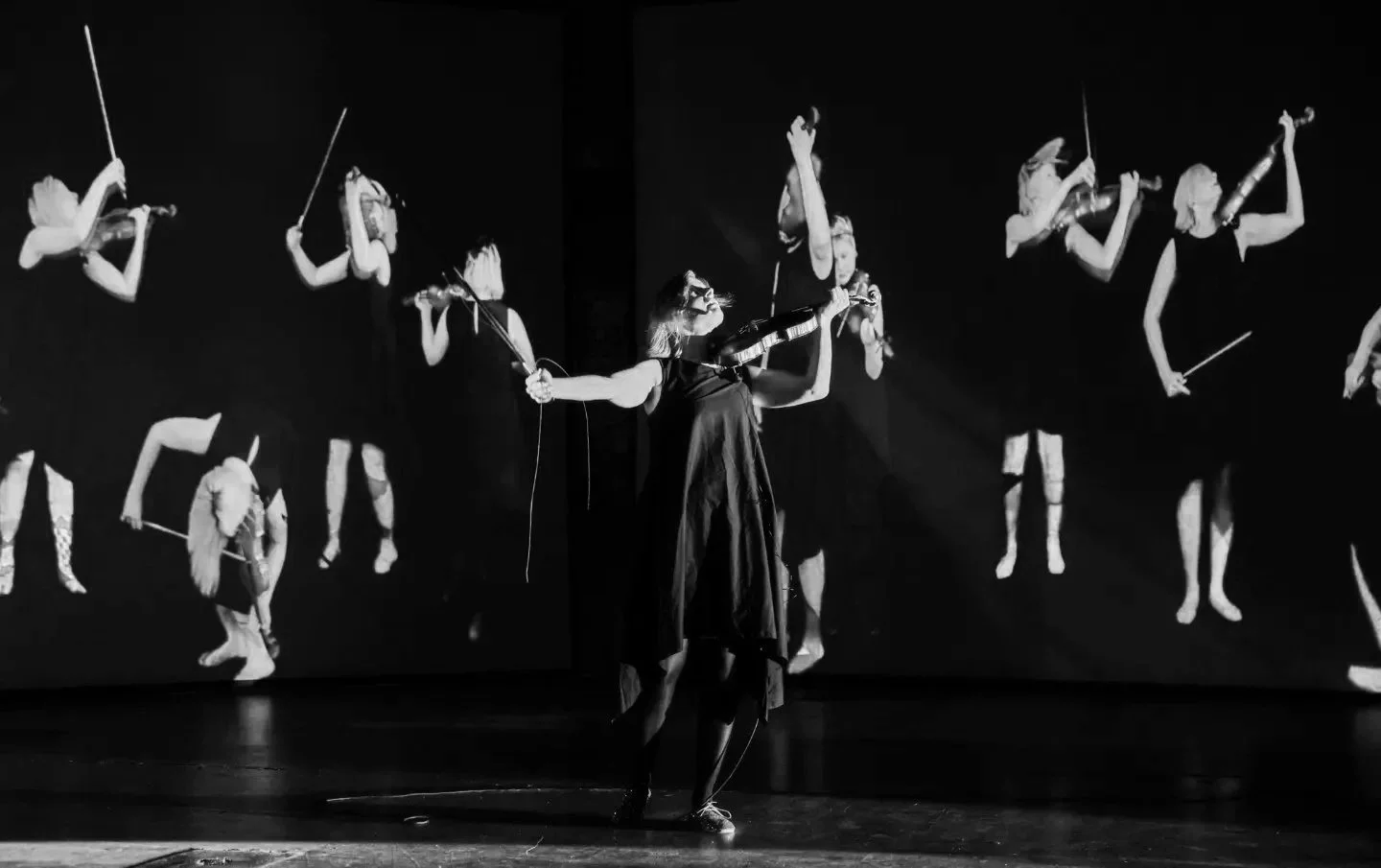
About
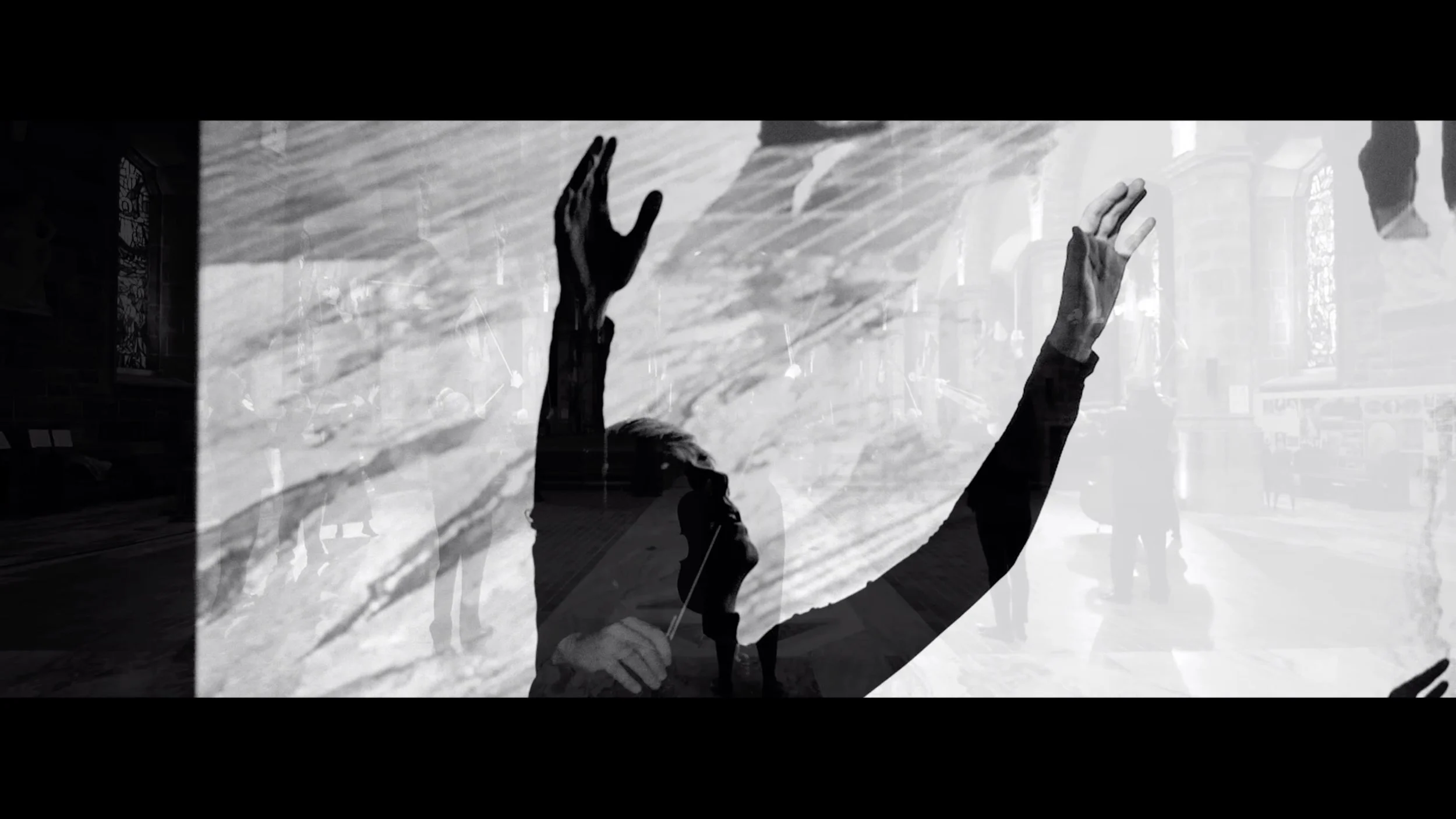
"Visualization" is a work in which the musicians elegantly throw/scatter invisible music to each other, over the listeners, and also over anyone in the vicinity. These invisible tones wash over the audience, bathing them in sound. This ritual-like work was composed for Luminosa Orchestra for the resonant space of Galway Cathedral. It is intended that the piece be performed in a very resonant space, in order for the musicians to be able to share their sounds fully, and physically, with the audience. It is hoped that the work can be performed as a sort of ritualistic return to live performance, after 2020. The piece is in part inspired by the work of Pauline Oliveros, Robert Fripp, Juraj Kojs, Diane Daly & Andrei Tarkovsky.
Dejana Sekulić Interpretation - Music Biennale Zagreb
I first got acquainted with Perkin's piece in late 2022 through Sergio Roberto Gratteri, and for the occasion of a duo performance with Victor Guaita. I created a first re-interpretation of Perkin's work, for two performers, with violin and viola and two-channel video, for the occasion of that 2023 January performance at DAS HAUS in Brussels. In January 2024, I was invited to propose a performance for Music Biennale Zagreb's MBZ33 Launch. Over the period of two months, I filmed and recorded 25 interpretations of the piece. The recordings were intentionally made in moments of quite different states of being: of rest, of fatigue, of calm, of restlessness, of joy, of sadness... spread over time with days of non-recording, or recorded in consecutive days, or making a few recordings in a day. Each of these elements played a role in creating time capsules, which would then be superposed to create an expanded time-space that would then be placed in yet another, "real-time" reality, once set and performed live in the performance space, and with audience present. The search of connection and reconnection, the act of experiential moment of sound is taking place between that introvert aspect of the artists and their extrovert self, and in front and with the audience. This piece is not romanticising any aspect of the act of performance, it dwells on superposed realities of always present elements of grace and that which is unpolished, yet testifies to humanity.
THE MORE BEAUTIFUL WORLD
The Fews Ensemble & Ciarán Hinds
(2022-24)
I. The Story of Separation
II. Between Worlds
III. The Story of Interbeing
Instrumentation
Chamber Ensemble and Mezzo-Soprano with Spoken Word
Duration
45 min
Author
Charles Eisenstein - “The More Beautiful World Our Hearts Know Is Possible”
Spoken Word
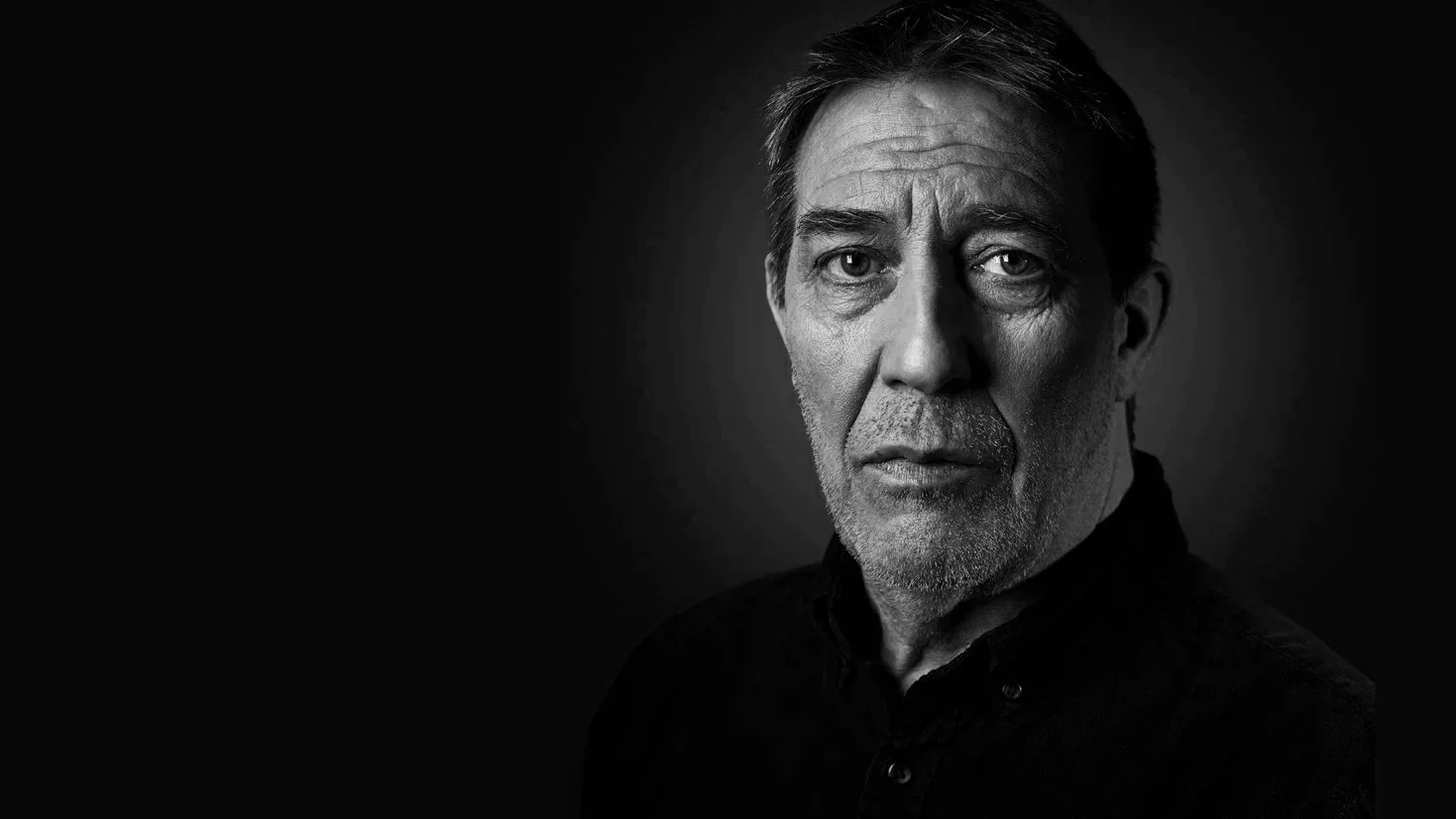
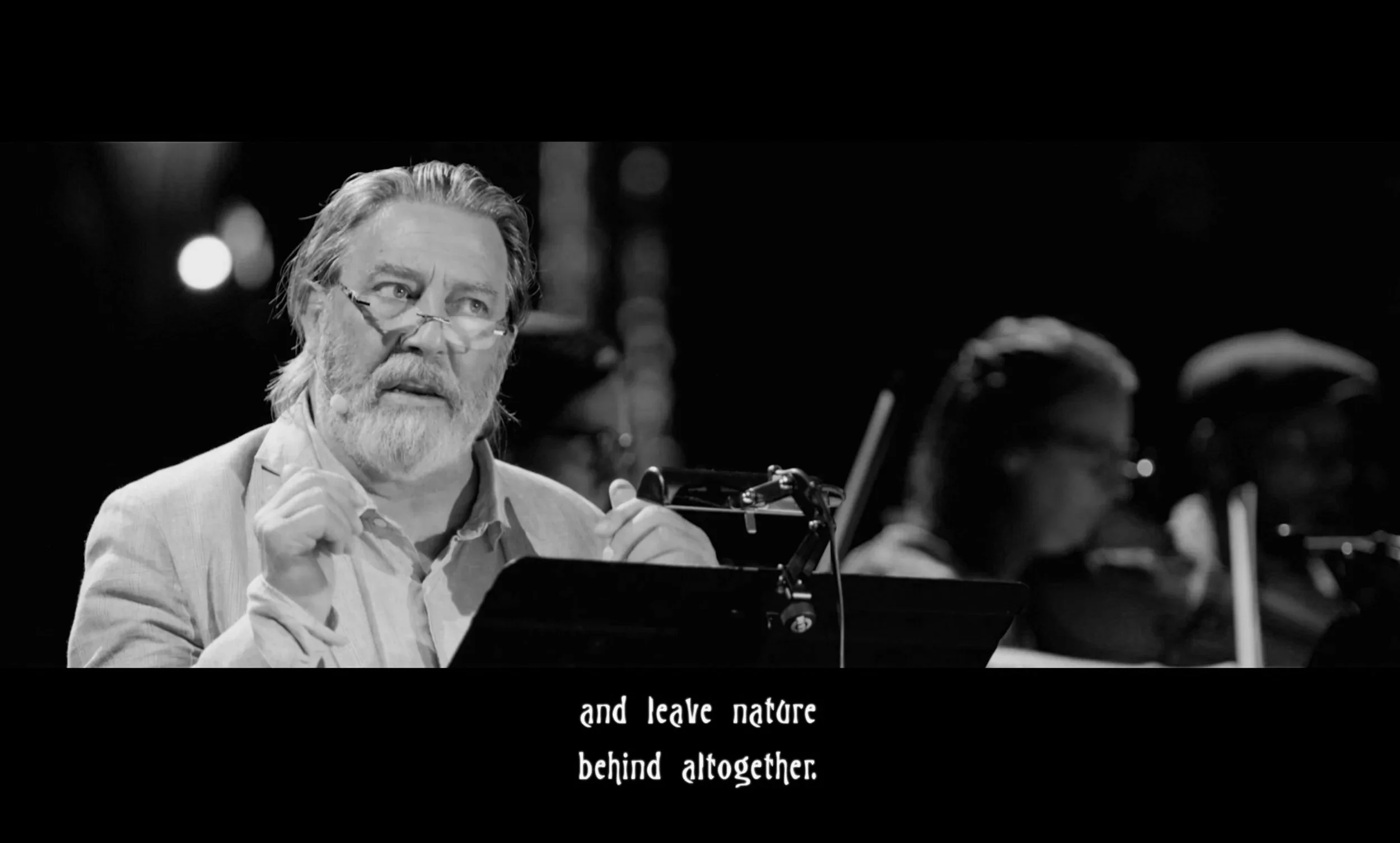
Ciarán Hinds
Performed By
The Fews Ensemble
Mezzo-Soprano
Sharon Carty
Stage Direction
Tom Creed
Commissioned By
Kilkenny Arts Festival - Supported By The Arts Council of Ireland
About
This setting of striking texts from ‘The More Beautiful World Our Hearts Know Is Possible’ by Charles Eisenstein is a culmination of two years of work. My intention was to create a numinous score, structured with both risk and integrity, aiming to distill the essence of this remarkable book. In a time of social and ecological crisis, what can we as individuals do to make the world a better place? This inspirational and thought-provoking book serves as an empowering antidote to the cynicism, frustration, paralysis, and overwhelm so many of us are feeling, replacing it with a grounding reminder of what’s true: we are all connected, and our small, personal choices bear unsuspected transformational power. By fully embracing and practicing this principle of interconnectedness—interbeing—we become more effective agents of change and have a stronger positive influence on the world. Above all, Eisenstein invites us to embrace a different understanding of cause and effect, sounding a clarion call to surrender our old worldview of separation, so that we can create the more beautiful world our hearts know is possible.
WASHING AWAY THE SORROW
Buxton International Festival, UK
(2024)
Instrumentation
Double Bass and Piano
Duration
16 min
Performed By
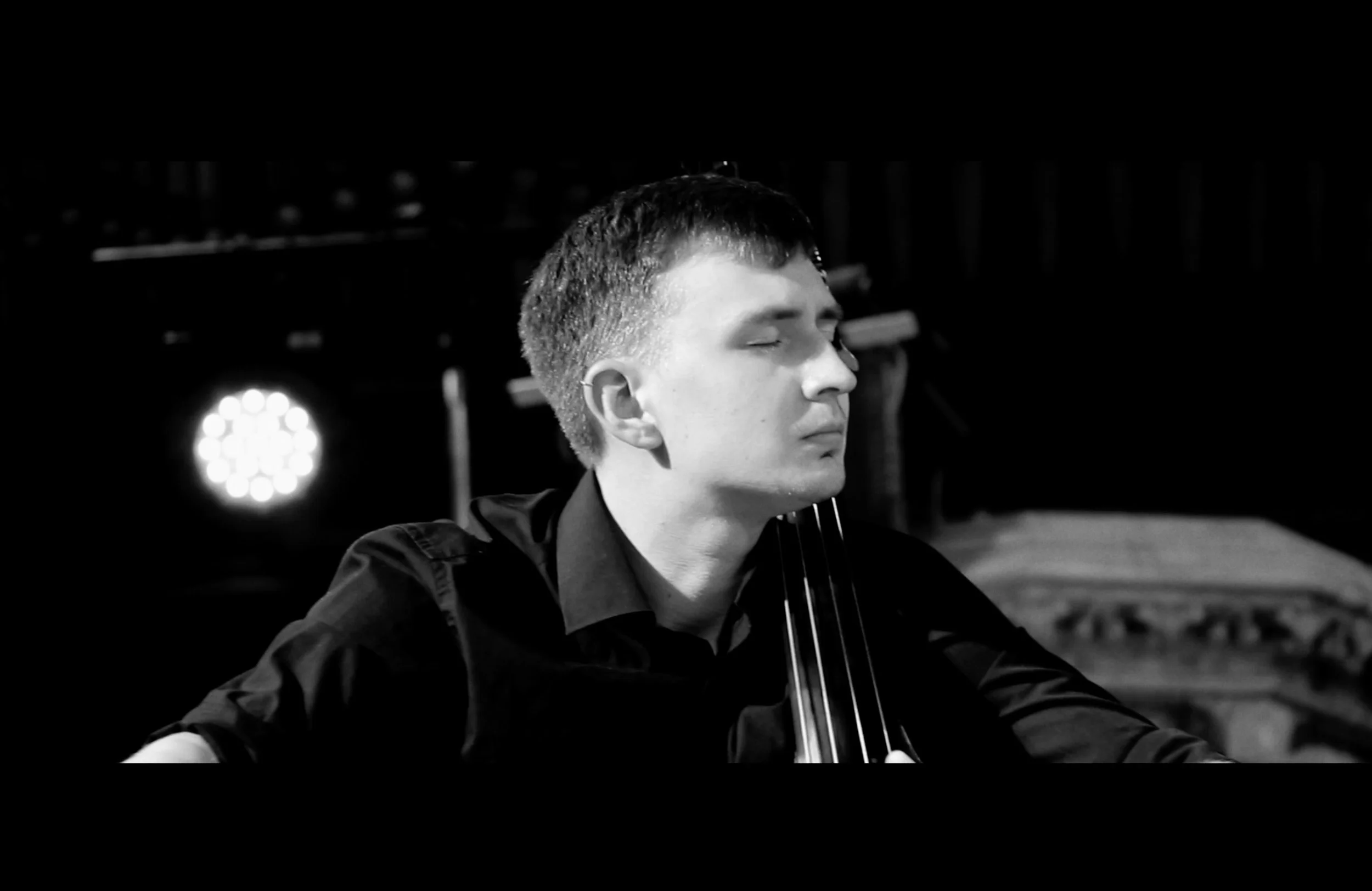
Will Duerden (Double Bass) and Wu Qian (Piano)
Commissioned By
Daphne and George Burnett
About
In its artistic intention, "Washing Away The Sorrow" seeks to create a place for the listener to be cleansed of what needs to be cleansed. Will Duerden emerges, each time anew, from the purifying washes of sound which gently cascade over us from afar, confirming the unsurpassed beauty and power of music.
THE COPY AND THE ORIGINAL
Killaloe Chamber Music Festival
(2019)
Instrumentation
For Baroque Violin and Modern Violin (With Movement)
(Version 2: Violin & Cello)
(Version 3: Viola & Cello)
Duration
10 min
Performed By
Diane Daly (Modern Violin) & Claire Duff (Baroque Violin)
Commissioned By
Killaloe Chamber Music Festival (The Arts Council of Ireland)

About The Work
“The Copy and The Original” is a work which explores the different colours of the Baroque Violin and the Modern Violin. In the piece we hear the two instruments blend together in a number of different ways, at times blurring the line between the colours of the two instruments and their different tunings. Continuously-emerging patterns, which echo between the two performers, flow out of the two violins. Dalcroze-inspired physical movements allow us to visually be aware of what is happening in the music. Dedicated to Dalcroze specialist Diane Daly, and Claire Duff. Note: Baroque Violin (415 Hz) and Modern Violin (440 Hz). Since its première, tre work was also performed at Muzik Biennale Zagreb 2025. Having been asked by numerous musicians to do different versions of the work, there is now a version of the piece for Violin & Cello, and also a version for Viola & Cello.
CHILDHOOD’S AWE
West Cork Chamber Music Festival
(2024)
Instrumentation
Archlute and Harpsichord
Duration
8 min
Performed By
Performed by Dohyo Sol (Archlute) and Marcus Mohlin (Harpsichord)
Co-Commissioned By
Cork County Council Arts Office and West Cork Chamber Music Festival 2024

About
The delicately resonant world of the work conveys the humbling feeling of finding the long-forgotten music box of childhood. Dedicated warmly to the memory of George Dunne, my first music teacher, an authentic elder with an unbroken inner-child. Jointly commissioned by the West Cork Chamber Music Festival and the Cork County Council Arts Office to mark the 25th anniversary of the purchase of the Cork County Council Harpsichord. Cork County Council and West Cork Music acknowledge the support of the Arts Council of Ireland. Composed especially for Dohyo Sol & Marcus Mohlin from Camerata Øresund, Denmark.
PIANO TRIO NO. 1 “FREAKSHOW”
Wigmore Hall - The Paddington Trio
(2024)
Instrumentation
Piano Trio
Duration
12 min
Performed here by The Paddington Trio at Wigmore Hall (2024)
Commissioned for Fidelio Trio by Gregynog Festival, Wales (2016)
About
"Freakshow" (2016) has been performed over 40 times worldwide. It is an emotionally wide-ranging exploration of the stars of “The Sideshow”. At times macabre and at times joyful, it is an intriguing suite of curiosities.
Performed by the Following Piano Trios
The Fidelio Trio
The Sitkovetsky Trio
The Paddington Trio
The Killaloe Festival Trio
The Alpenarte Festival Trio
The Dublin IMC Piano Trio
The Ludwig Trio
The De Beauvoir Trio
The Trio Ascendum
The Opalio Trio
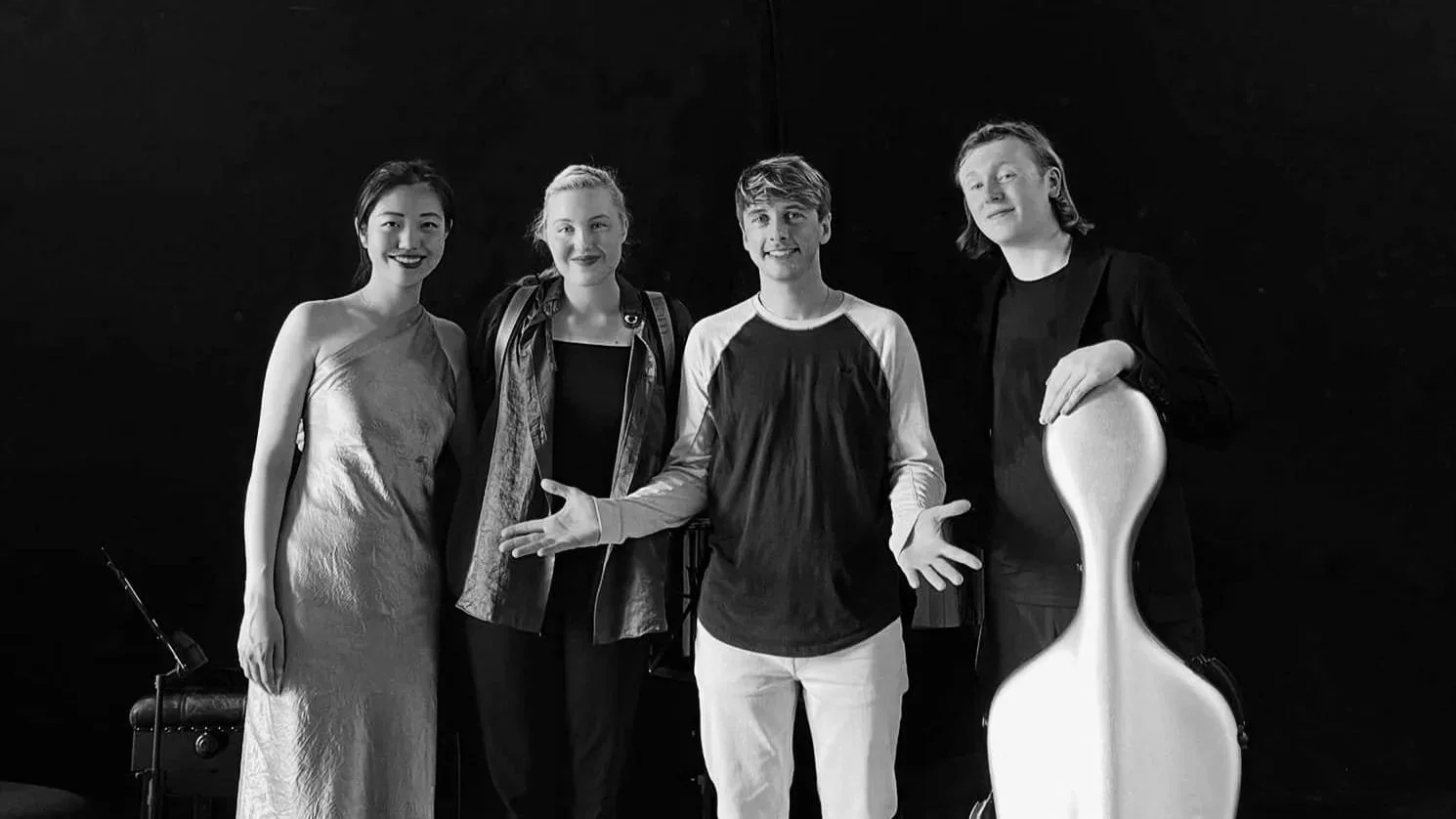
Sam Perkin with The Paddington Trio
PROGRAMME NOTE BY MICHAEL PARLOFF
(Artistic Director: Parlance Chamber Concerts, NJ, USA)
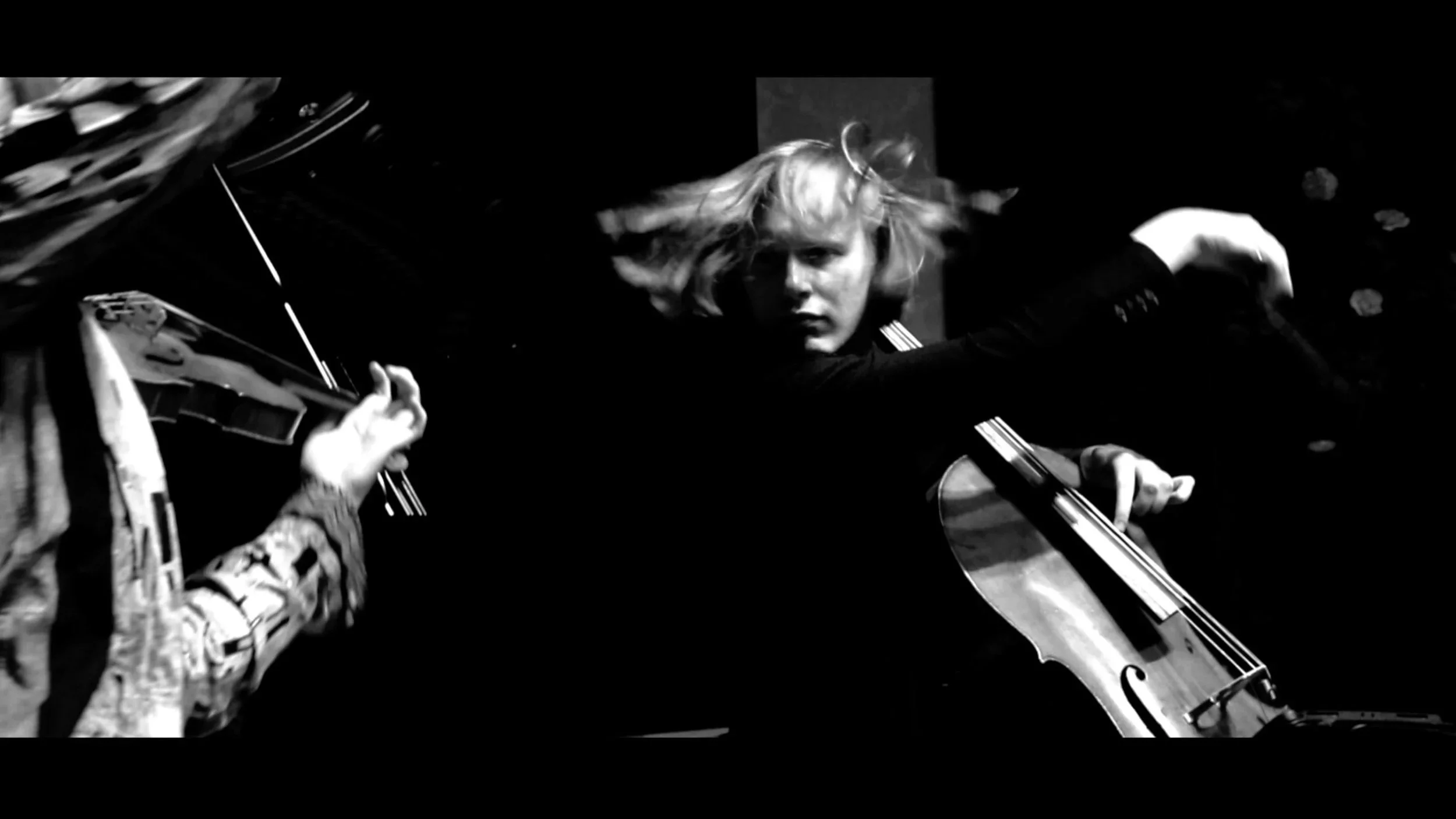
Sam Perkin’s 2016 piano trio was commissioned by the Gwyl Gregynog Festival for Fidelio Trio, the oldest classical music festival in Wales. “Freakshow” was composed in honor of the centenary of the Easter Rising, the 1916 armed Irish insurrection against British rule. The rebellion was soon quashed, sixteen rebels were executed, and 1800 prisoners were transported to the Welsh internment camp at Fron-Goch where they were detained from June to December, 1916. Perkin’s “Freakshow” was inspired by stories of the dismal conditions in the prison camp. According to one account, the entire camp was so overrun with rats that one prisoner went to great lengths to catch and feature them in a "Rat Circus” that he presented for the entertainment of his fellow inmates. The macabre tone of this story prompted Sam Perkin to write a set of musically diverse miniatures that draw on themes of captivity and spectacle as points of departure. “Freakshow” is a set of imaginative musical portraits of historical figures whose physical deformities were exhibited as carnival and circus sideshow spectacles during mid-19th and early 20th centuries. Each movement represents a different performer:

The Paddington Trio perform Sam Perkin's Piano Trio No. 1 "Freakshow" at Wigmore, London
1. THE RAT CIRCUS
The Rat Circus provides a brief sonic image of the viciously squeaking and skittering rats in the prisoner’s circus at Fron-Goch Internment Camp.
2. THE TWO-HEADED NIGHTINGALE
The Two-Headed Nightingale is a delicately grotesque waltz evoking a stage performance by the conjoined African American twins, Millie and Christine McCoy, who traveled the world during the mid-19th century as popular song and dance entertainers. Over the course of their lives, they overcame years of slavery, forced medical observation, and degrading participation in fairs and freak shows.
3. THE LIVING SKELETON
The Living Skeleton is a feather-weight musical depiction of Issac W. Sprague whom PT Barnum showcased in the 1860s as “The Original Thin Man” At age 44, Sprague was 5 feet and 6 inches tall but weighed only 43 pounds.
4. THE GENTLE GIANT
The Gentle Giant is a gently ironic, pizzicato portrait of the massive Robert Wadlow, who grew to be the tallest person in recorded history. At the time of his death in 1940, Wadlow had grown to the height of 8 feet, 11.1 inches.
5. THE ANGEL OF DEATH
The Angel of Death is a hauntingly chorale-like sketch of the malicious Josef Mengele, the fearsome Nazi doctor who performed genetic experiments on captives at Auschwitz. Among his subjects were the seven members of the Ovitz Family, an imprisoned family of Jewish Hungarian dwarves who made their living as entertainers. Menegle kept them alive as subjects for his pseudoscientific experiments on heredity.
6. PANDORA'S BASKET
Pandora’s Basket was inspired by a famous early 20th-century contortionist named Li Yeng. The armless and legless Chinese performer became known as the “Basket Lady of Weijing Province”, since she was small enough to sit in a basket only several inches deep. With its evocative hints of chinoiserie, the movement is the most emotionally far-ranging in the set, vacillating between diaphanous, filigreed textures and more forceful displays of Ravel-like virtuosity.
7. THE ARMLESS FIDDLER
The upbeat final movement, The Armless Fiddler, is a toe-tapping celebration of Carl Herman Unthan, an armless, Prussian-born violinist and actor who learned to play the violin with his feet by strapping the instrument to a stool. He became such an accomplished performer that he appeared as a soloist with many European orchestras and lectured to injured German World War I veterans about how to retrain their legs and feet to take over for their missing upper limbs. In the Armless Fiddler, Sam Perkin creates a jauntily pizzicato Irish jig to summon Unthan’s indomitable spirit.
STRING QUARTET NO. 5
”My Young Love Was Gone”
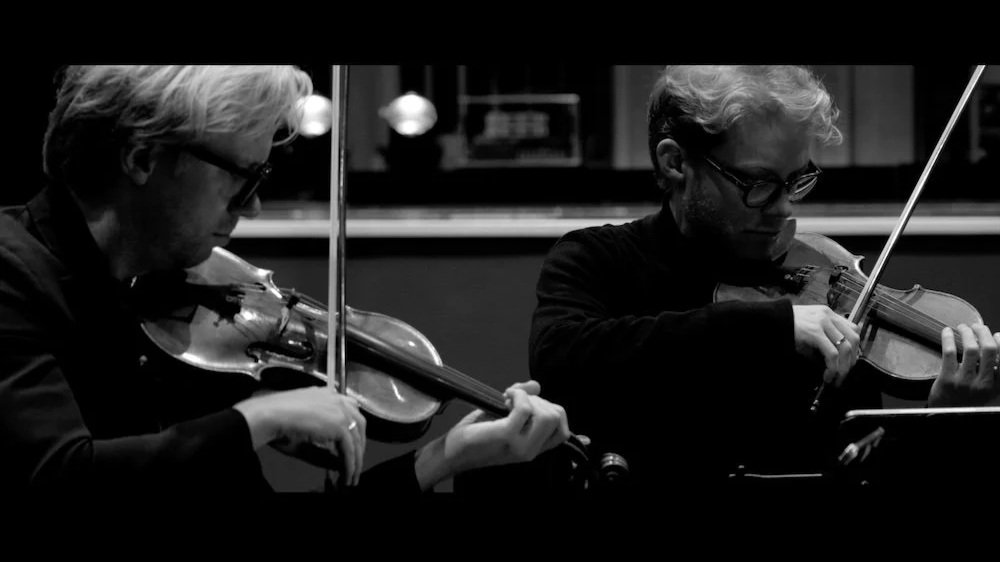
The Marmen Quartet (2024)
Instrumentation
String Quartet and Voice
Duration
9 min
Performed By
The Marmen Quartet
Commissioned By
The National String Quartet Foundation
About
When I was composing a work entitled Pause for the Ortús Chamber Music Festival in 2016, almost 10 years ago, I had done a number of experiments with Irish folksong from a contemporary perspective. My aim was to authentically offer an original point of view from which to view these masterful songs, or at least to show how I would dream of arranging them. For Pause in 2016, I decided on arranging The Foggy Dew, though I had carried out a number of irresistible compositional experiments with She Moved Through The Fair. In 2024, I finally had to revisit these sketches, as they were just asking to be written and I would not have forgiven myself for not allowing the structure to flower into the piece that it is, My Young Love Was Gone (2024). The compositional idea was like a magnet pulling me towards it. My ear guided me towards arranging this timeless melody in such a way as to express the heart of the text while not getting in the way, only saying just enough throughout (a delicate tight-rope walk with the String Quartet), allowing the soul of this overwhelmingly beautiful song to breathe a new breath.
STRING QUARTET NO. 3
”Awe” (For The Artists That Didn’t Make It)
Explore Ensemble (2023)
Instrumentation
String Quartet (The Present) and Film (The Past)
Duration
18 min
Performed By
Explore Ensemble (UK)
Commissioned By
Louth Contemporary Music Festival (Ireland)
About
"Visualization" is a work in which the musicians elegantly throw/scatter invisible music to each other, over the listeners, and also over anyone in the vicinity. These invisible tones wash over the audience, bathing them in sound. This ritual-like work was composed for Luminosa Orchestra for the resonant space of Galway Cathedral. It is intended that the piece be performed in a very resonant space, in order for the musicians to be able to share their sounds fully, and physically, with the audience. It is hoped that the work can be performed as a sort of ritualistic return to live performance, after 2020. The piece is in part inspired by the work of Pauline Oliveros, Robert Fripp, Juraj Kojs, Diane Daly & Andrei Tarkovsky.
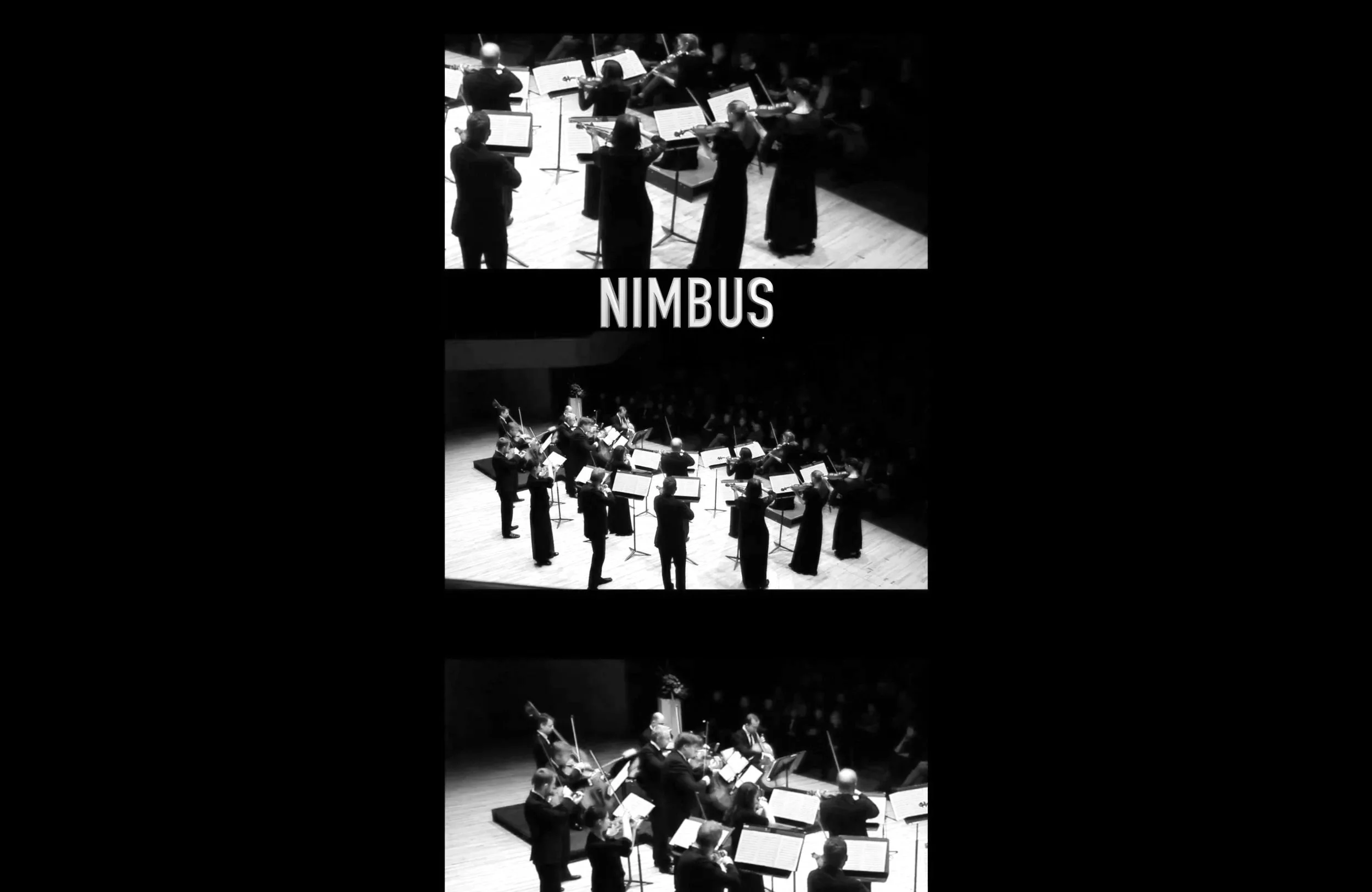
NIMBUS
The Irish Chamber Orchestra
(2015)
Instrumentation
String Orchestra In 18 Parts
Duration
20 min
Commissioned By
Irish Chamber Orchestra
Supported By
The Arts Council of Ireland
Definition of Nimbus
nim·bus noun \ˈnim-bəs\
: a circle of light or halo
plural nim·bi or nim·bus·es
1: A splendid aura or light that surrounds a person or thing.
2: A radiant light said to surround a deity when on earth.
3: A dark grey cloud that produces rain or snow.
About
Very occasionally, you cross paths with someone and you feel a strong presence. It is like an aura that only you can see. Its radiance is outside of the realm of the five senses and the physical plane. Some things can never be told through words. That is why there is music.
Nimbus is scored for String Orchestra in 18 individual parts, and is dedicated to The Irish Chamber Orchestra. Supported by The Arts Council of Ireland.
VISUALIZATION
Luminosa Orchestra
(2021)
Instrumentation
Strings Orchestra (With Movement)
Duration
Flexible (10 min+)
Commissioned By
Luminosa Orchestra (With Diane Daly)
Supported By
The Arts Council of Ireland
About
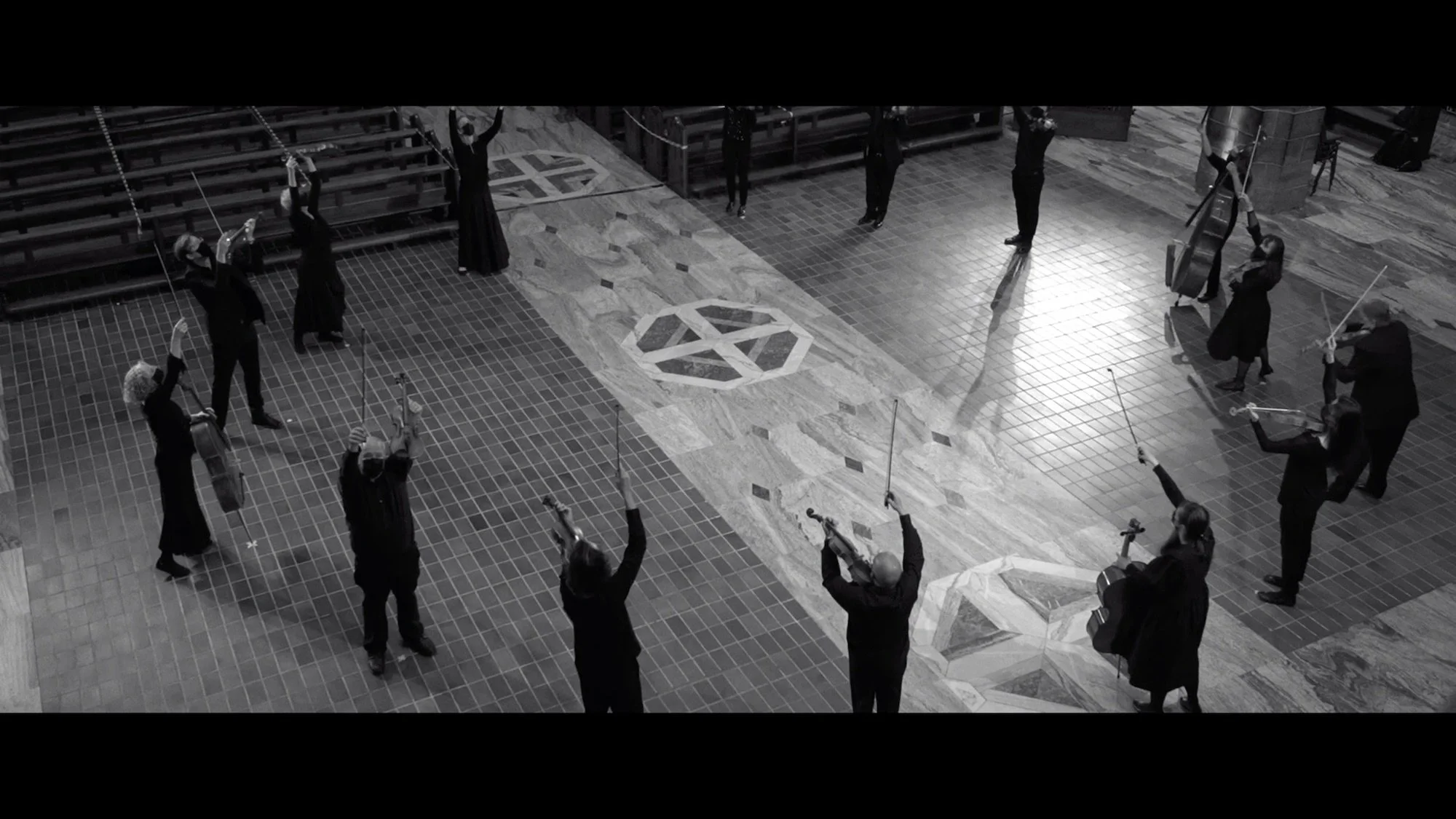
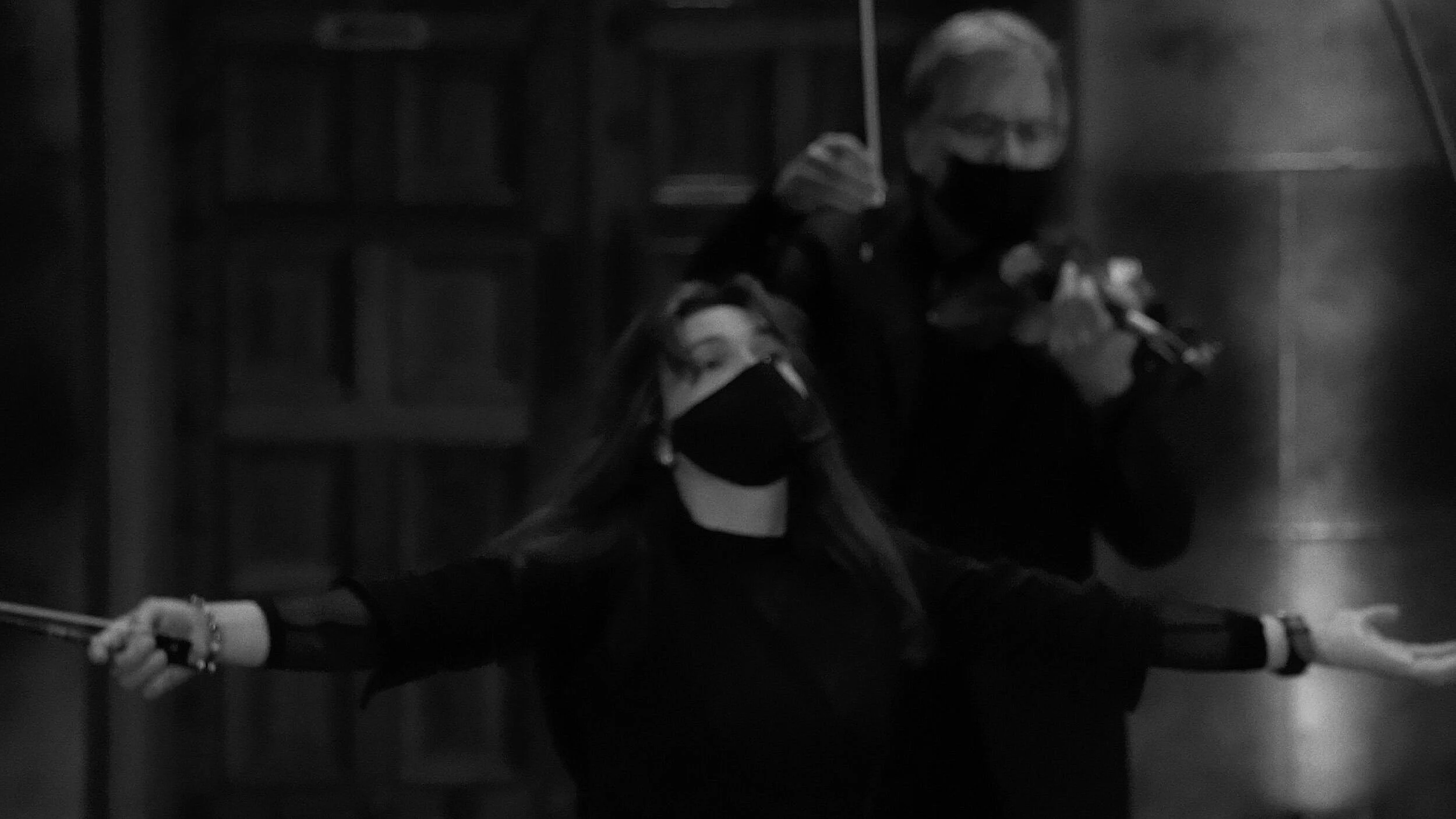
"Visualization" is a work in which the musicians elegantly throw/scatter invisible music to each other, over the listeners, and also over anyone in the vicinity. These invisible tones wash over the audience, bathing them in sound. This ritual-like work was composed for Luminosa Orchestra for the resonant space of Galway Cathedral. It is intended that the piece be performed in a very resonant space, in order for the musicians to be able to share their sounds fully, and physically, with the audience. It is hoped that the work can be performed as a sort of ritualistic return to live performance, after 2020. The piece is in part inspired by the work of Pauline Oliveros, Robert Fripp, Juraj Kojs, Diane Daly & Andrei Tarkovsky.
CHORA
Luail: Ireland’s National Dance Company
(2025)
Instrumentation
String Orchestra (With Dance)
Duration
20 min
Choreography By
Liz Roche
Performed By
The Irish Chamber Orchestra
Luail: Ireland’s National Dance Company
Artistic Director
Katherine Hunka

About
Luail opened the Dublin Dance Festival’s 21st Edition at Bord Gáis Energy Theatre with its first major production, Chora, performed by the company’s ensemble alongside the Irish Chamber Orchestra. Drawing on the ancient Greek concept of ‘chora’ — a space that is both physical and abstract — this triple bill presents a dynamic exchange between dancers and musicians, drawing on themes of memory and landscape. Each work creates its own distinct and evocative atmosphere within the shared terrain of Chora: Invocation by Mufutau Yusuf is set to the composition Dig Deep by Julia Wolfe; Constellations by Liz Roche is performed alongside Nimbus by Sam Perkin; and I Contain Multitudes by choreographers Guy Nader and Maria Campos features Canto Ostinato by Simeon ten Holt, rearranged for the Irish Chamber Orchestra by Marijn van Prooijen with kind permission from the Simeon ten Holt Foundation.
WAVES
The Irish Chamber Orchestra
(2016-2018)
Instrumentation
Solo Percussion and String Orchestra
Duration
18 min
Supported By
The Arts Council of Ireland
Soloist
Alex Petcu
Conductor
Gábor Takács-Nagy
Commissioned By
The Irish Chamber Orchestra
About
Tinnitus is the hearing of sound when no sound is present. As a composer, hearing these phantom sounds can be frustrating. They can make composing, conversing, and sleeping quite difficult. Some people find that white noise, rainfall or ocean waves can help to mask these sound mirages. The ocean wave sounds worked for me, and I listened to them a lot. Over 365 days, while I had them flowing through my mind, I took these sounds from nature that I cherish so much, and composed a work that is entirely made up of these beautiful patterns. In essence, 365 variations on a wave gesture form the material for the work, which are then woven together into a structured whole. The ebb and flow in the music comes therefore from the true rhythm of nature and in the way it mysteriously varies itself. I attempted to harness these natural forces to create a work in which we can be in awe of nature’s secrets, but also a work that, who knows, can maybe cure tinnitus.

Gábor Takács-Nagy conducts “Waves” with the Irish Chamber Orchestra
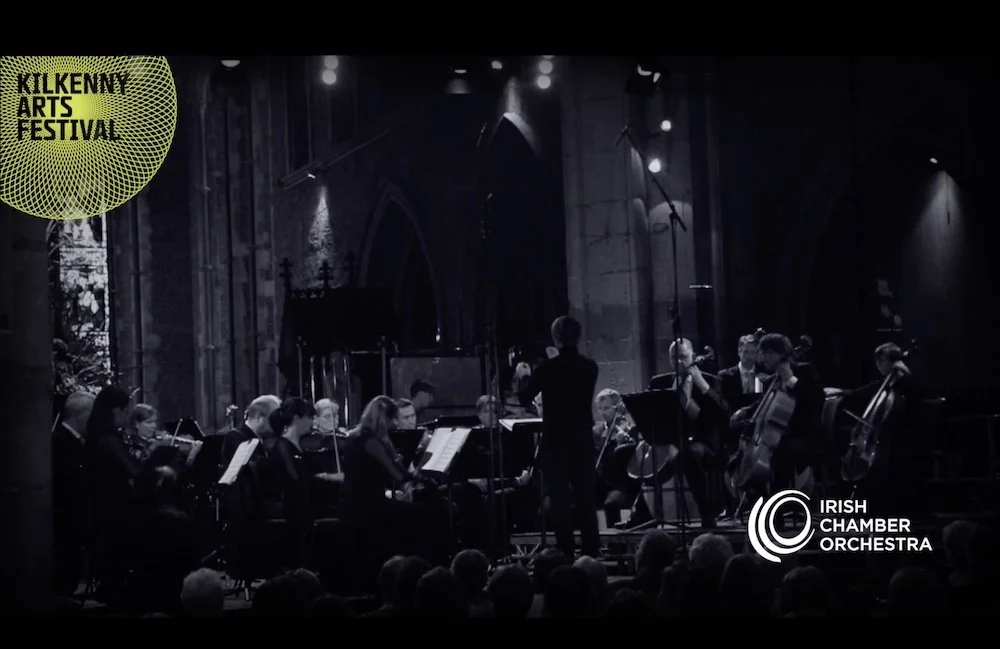
Sam Perkin conducts “Waves” with the Irish Chamber Orchestra
STRING TRIO "FLOW"
Aoife Burke (Spotlight Chamber Music Series)
(2018)
Instrumentation
String Trio
Duration
14 min
Supported By
The Arts Council of Ireland
Commissioned By
Aoife Burke for The Spotlight Chamber Music Series and Triskel Arts Centre

About
As a sound meditation, this piece aims to create a trance-like experience, both for the performer and for the listener: To set up that space which we often call ‘the zone’, where magic is born in the air. Commissioned especially for the Spotlight Chamber Music Series by cellist and curator Aoife Burke. First performed at The Triskel Arts Centre Cork, performed by Siobhán Doyle, David Kenny & Aoife Burke. Filmed by Chris Cullen and recorded by Chris Somers. Subsequently released by Louth Contemporary Music Society, performed by Mia Coopoer, Joachim Roewer & William Butt.
INCANTATION
Cellist & Vocalist: Naomi Berrill
(2025)
Instrumentation
Solo Cello & Voice (As One Instrument
Duration
10 min
Supported By
The Arts Council of Ireland
Commissioned By
Cellist & Vocalist: Naomi Berrill
About
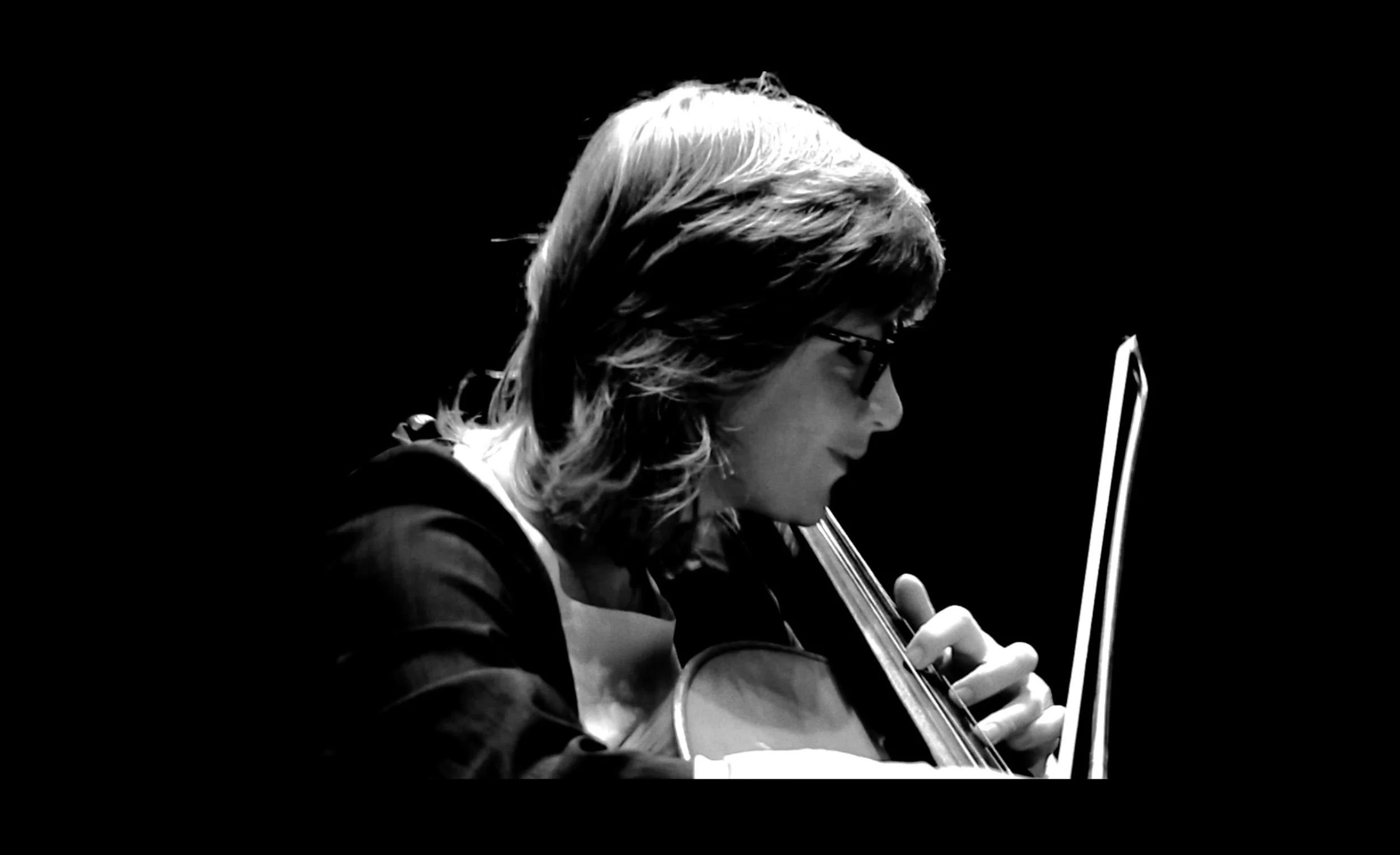
One of my favourite things about being a composer is working with excellent musicians, fellow human beings who have dedicated their lives to mastering their chosen instrument. When a performer and their instrument are as one, it is a thing of beauty, one melting into the other. It is almost as if we can hear them speaking through their instrument, expressing their experience. Composed for Cellist & Vocalist Naomi Berrill, this hypnotic work sets up a state of flow which challenges the performer in terms of how far they are willing to go (technically, emotionally and sensually) to become one with their instrument.
DEPARTURE
Music Network Residency with Patrick Rafter
(2022)
Instrumentation
Violin (Patrick Rafter) and Organ (Sam Perkin)
Duration
1 min Excerpt (From "Freedom In Performance")
Residency
Music Network: Resonate Residency 2022
Supported By
Triskel Arts Centre

MORE BEAUTIFUL THAN IT HAS TO BE
With Violist Nathan Sherman
(2023)
Instrumentation
Solo Viola and Audio Track
Duration
7 min
Commissioned By
Nathan Sherman
(From the Album “The Gentle Erasure of Time”)
Supported By
The Arts Council of Ireland
About
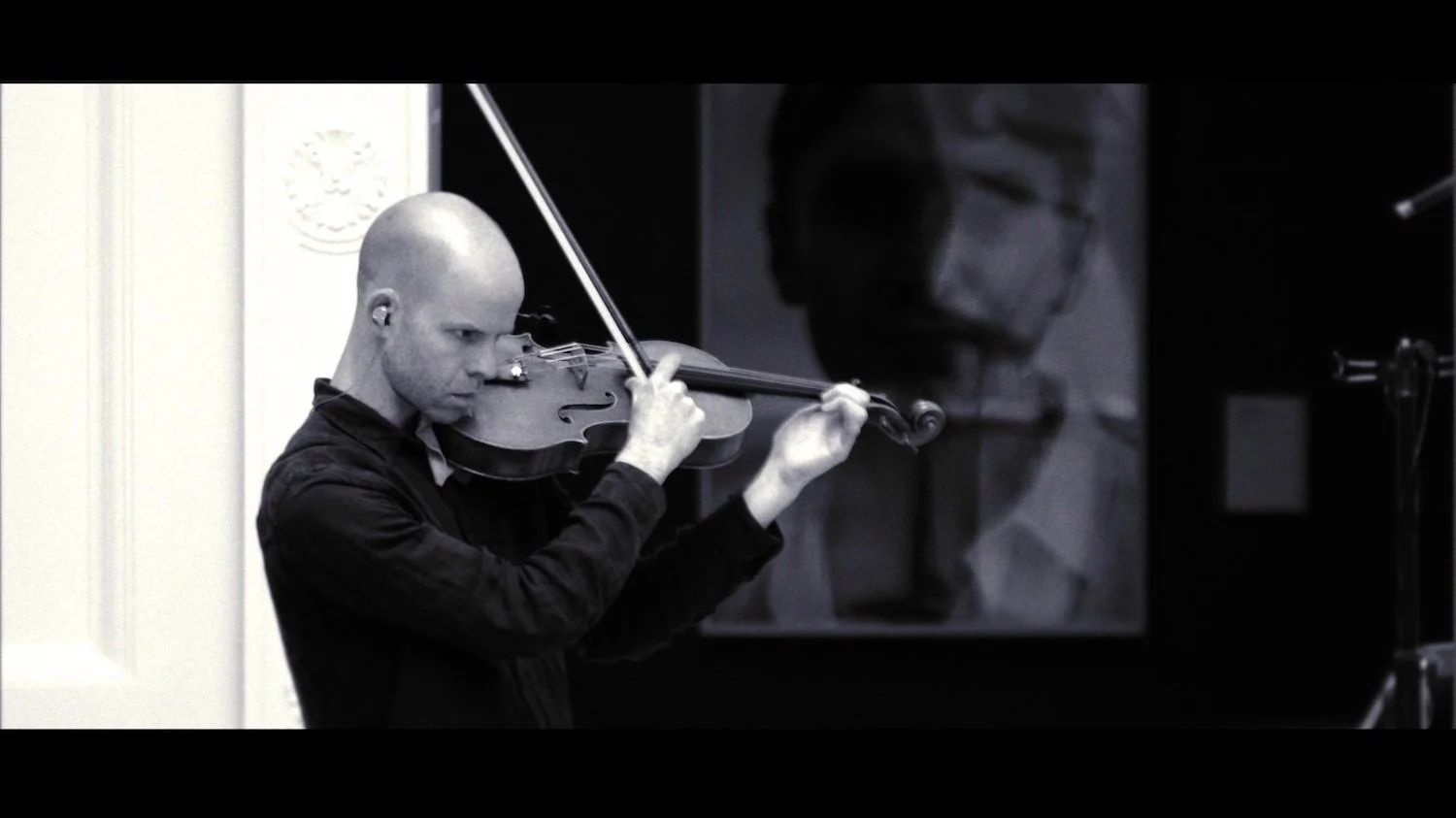
After reading the following quote by writer Charles Eisenstein, I instantly realised that what the quote describes has always been my approach to writing music. The quote contains a paradox, though paradoxes do themselves form part of reality. With this in heart and mind, I set out to write a piece for Nathan which expresses the intention of the quote, while engaging in the wonderful sound-colours he creates so beautifully.
"If I write something that is really beautiful, that is more beautiful than it has to be, it probably actually serves what it has to be even better than I understand".
PIANO TRIO “FREAKSHOW”
The Sitkovetsky Trio
(2016)
Instrumentation
Piano Trio
Duration
12 min
Commissioned By
Gregynog Festival for Fidelio Trio
Performed By
The Sitkovetsky Trio at Parlance Chamber Concerts (USA)
About
Sam Perkin’s 2016 piano trio was commissioned by the Gwyl Gregynog Festival for Fidelio Trio, the oldest classical music festival in Wales. “Freakshow” was composed in honor of the centenary of the Easter Rising, the 1916 armed Irish insurrection against British rule. The rebellion was soon quashed, sixteen rebels were executed, and 1800 prisoners were transported to the Welsh internment camp at Fron-Goch where they were detained from June to December, 1916. Perkin’s “Freakshow” was inspired by stories of the dismal conditions in the prison camp. According to one account, the entire camp was so overrun with rats that one prisoner went to great lengths to catch and feature them in a "Rat Circus” that he presented for the entertainment of his fellow inmates. The macabre tone of this story prompted Sam Perkin to write a set of musically diverse miniatures that draw on themes of captivity and spectacle as points of departure. “Freakshow” is a set of imaginative musical portraits of historical figures whose physical deformities were exhibited as carnival and circus sideshow spectacles during mid-19th and early 20th centuries. (Programme Note by Michael Parloff, Artistic Director of Parlance Chamber Concerts, NJ, USA)

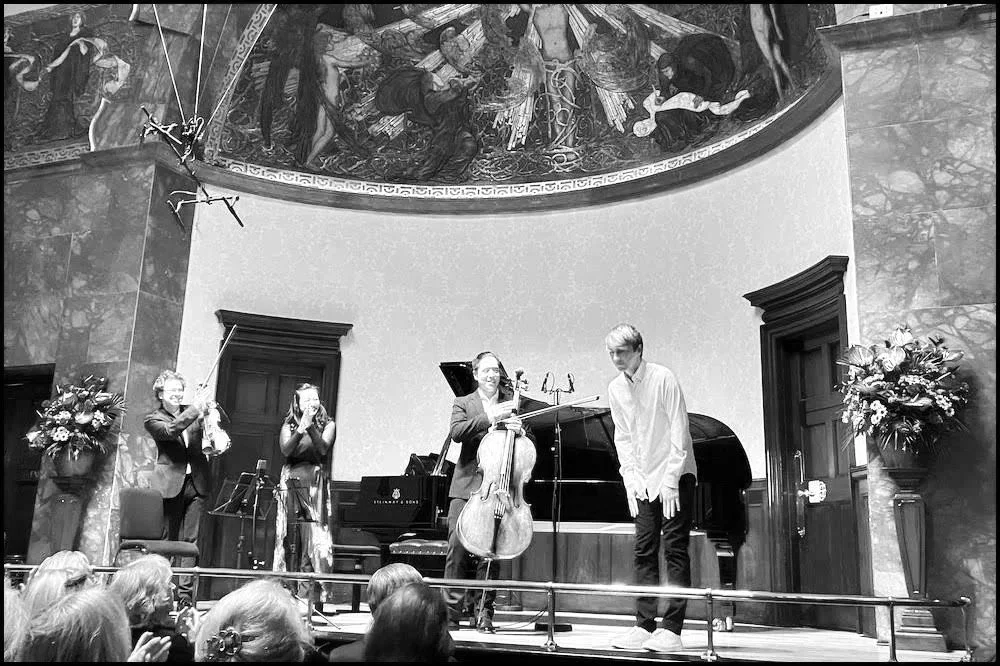
Sam Perkin & The Sitkovetsky Trio at Wigmore Hall, London
ALTA
Alta Chamber Music Festival, Norway
(2019)
Instrumentation
Two String Trios with the Sounds of the Northern Lights
Duration
10 min
Commissioned By
Alta Chamber Music Festival (With Miriam Helms Ålien)
Collaboration With
Scientist: Unto K. Laine
About
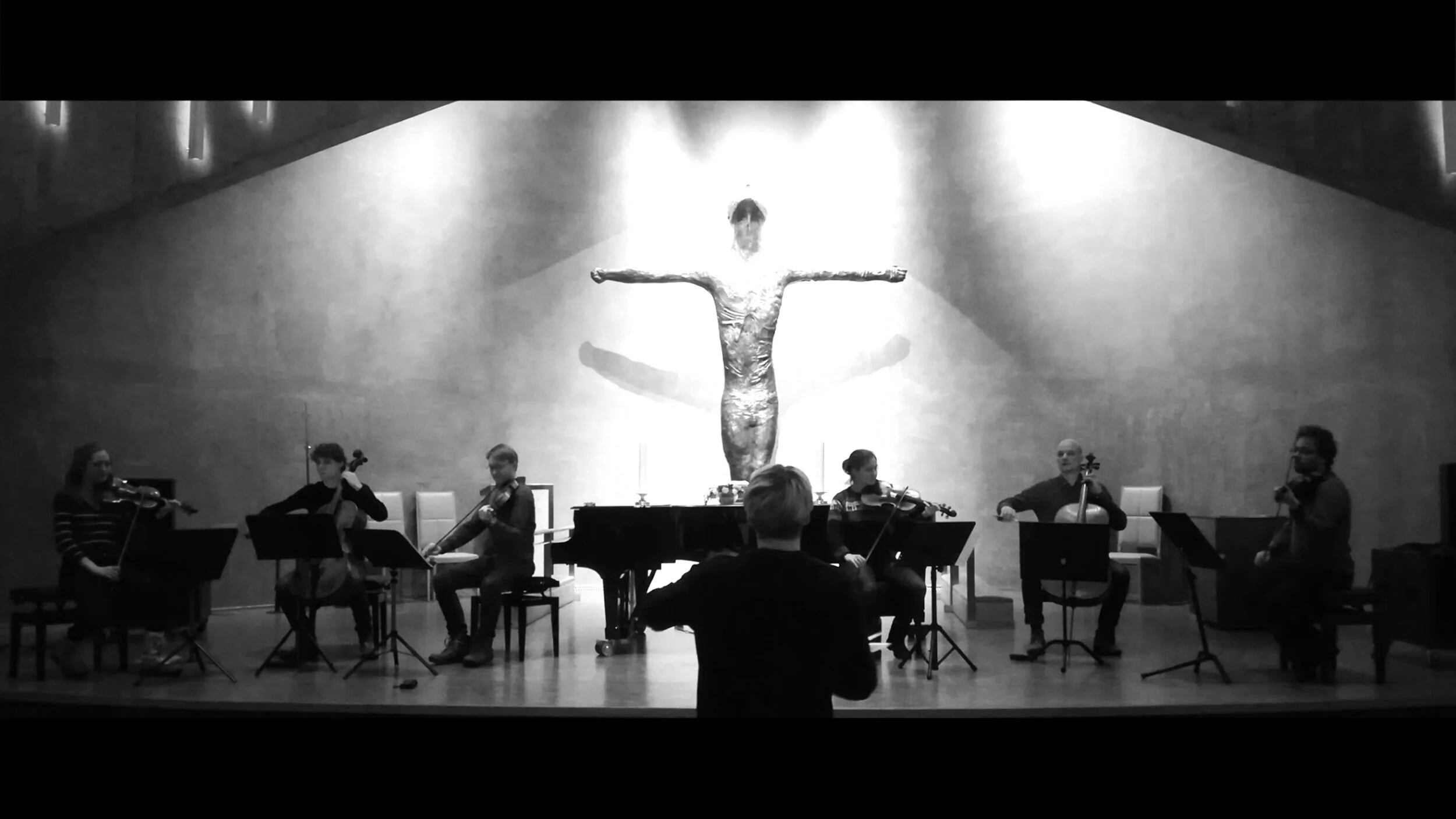
Following recent scientific study, we are now almost certain that the Northern Lights do indeed make sounds that are audible to humans. This was a much debated subject until the last decade. Before, the sounds were simply written off as myth or folklore. Unto K. Laine, who lead a Finnish study to capture these sounds, used an array of microphones and sophisticated audio equipment to pinpoint these unusual sounds, which appear to be generated in the air about 230 feet above the ground. Laine’s findings show that these mysterious sounds are not illusions, auditory hallucinations, or other acoustical phenomena emerging from frost or trees. According to Laine: “The recorded unamplified sounds can be similar to crackles or muffled bangs, which last for only a short period of time. These sounds are so soft that one has to listen very carefully to hear them and to distinguish them from the ambient noise.” In this atmospheric, yearning piece, we follow Laine’s journey to capture the elusive sounds of the Northern Lights.
FOR PIANO AND GUN SOUNDS
West Wicklow Festival
(2018-19)
Instrumentation
Piano, Sine Tones and Gun Sounds
Duration
11 min
Commissioned By
West Wicklow Festival 2019 (Solo Piano: Fiachra Garvey)
Supported By
The Arts Council of Ireland

FOR THREE LEVER HARPS
Glissando Harp Ensemble
(2019)
Instrumentation
Three Lever Harps
Duration
8 min
Commissioned By
Damhnait Nic Suibhne for Glissando Harp Ensemble
Supported By
Cork Education and Training Board
LANGUAGE
With Violinist Miranda Cuckson
(2017)
Instrumentation
Solo Violin
Duration
15 min
Commissioned By
West Cork Chamber Music Festival for Miranda Cuckson
Supported By
The Arts Council of Ireland
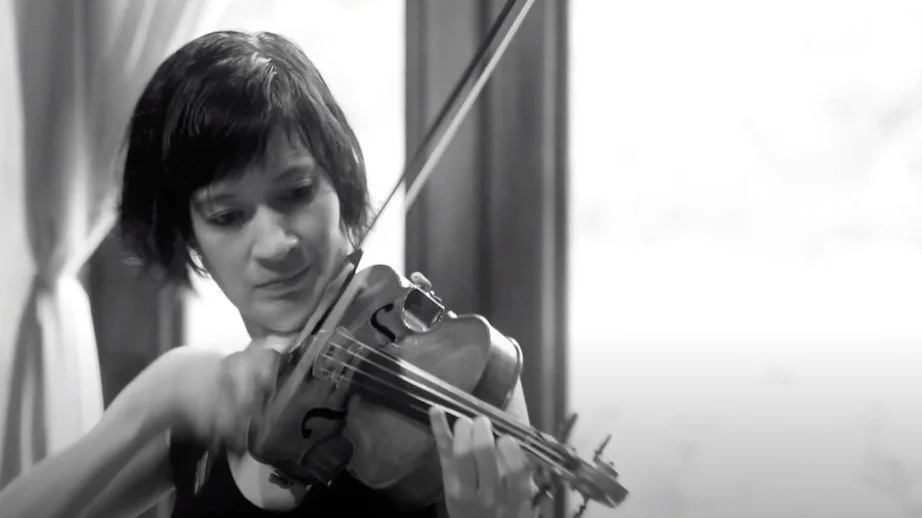
CHILDREN IN THE UNIVERSE
With Crash Ensemble & Diamanda Dramm
(2020-22)
Instrumentation
For Crash Ensemble, Audio “Halo Track” and Solo Violin
Solo Violin: Diamanda Dramm
(Subsequent Film by Laura Sheeran)
Duration
25 min
Commissioned By
Crash Ensemble. Premièred at New Music Dublin
Supported By
The Arts Council of Ireland

ORCHESTRA IN THE DIGITAL AGE
RTÉ National Symphony Orchestra
(2019)
Instrumentation
Orchestra and Sine Tones
Duration
10 min
Supported By
Contemporary Music Centre Ireland, Composer Lab 2019
Performed By
Gavin Maloney / The RTÉ National Symphony Orchestra

FREEDOM IN PERFORMANCE
Music Network Residency with Patrick Rafter
(2022)
Instrumentation
Solo Violin (Patrick Rafter), Piano, Electric Guitar, Organ (Sam Perkin)
Duration
1 hr (Concert for Residency)
Residency For
Music Network Resonate Residency 2022
Premièred At
Triskel Arts Centre
<3
With Double Bassist Caimin Gilmore
(2019)
Instrumentation
For Double Basses and the Sounds of Children Giggling
Duration
9 min
Commissioned and Performed By
Caimin Gilmore (String Ogham)
Supported By
The Arts Council of Ireland

GLOW
Echo Collective Lyon, France
(2019)
Instrumentation
Voices and Sine Tones
Duration
7 min
Commissioned By
Echo Collective, Lyon, France
Supported By
Centre Hospitalier Saint Jean de Dieu, Lyon, France

SUBURBAN DISTORTION
Network For New Music, Philadelphia
(2021)
Instrumentation
Electric Guitar (Distortion), Electric Guitar (Clean), Acoustic Guitar
Duration
27 min
Commissioned By
Thomas Schuttenhelm and Network For New Music, Philadelphia
Supported By
The Arts Council of Ireland.
Released By
Louth Contemporary Music Society

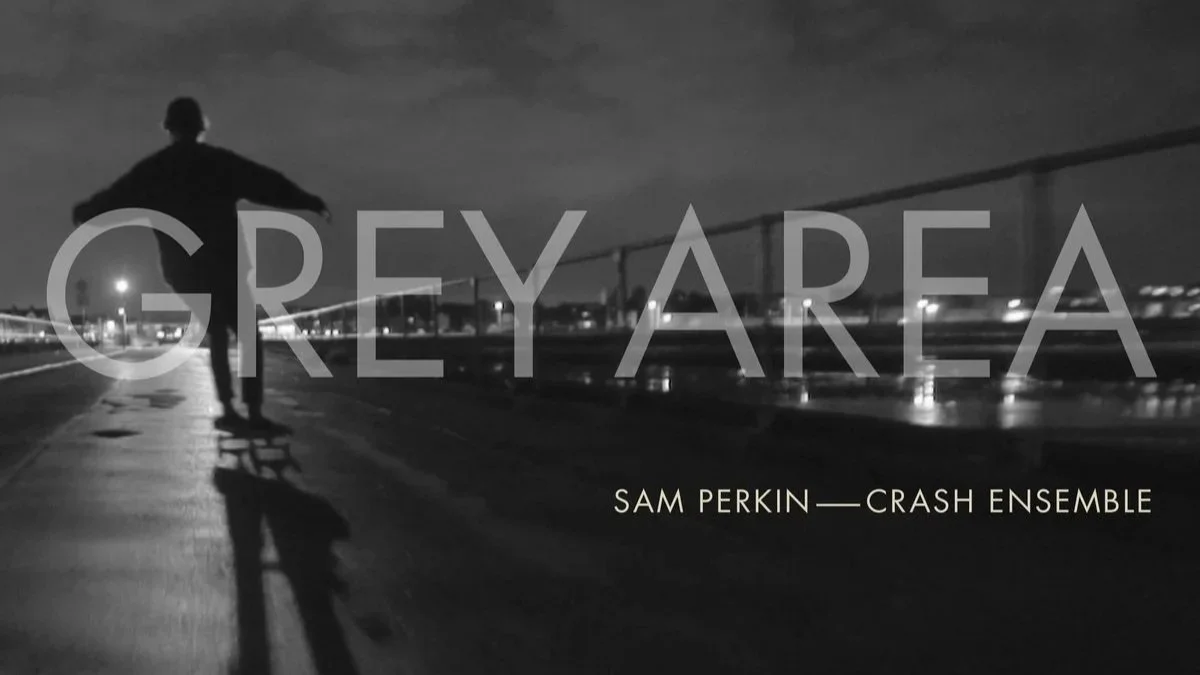
GREY AREA
With Crash Ensemble
(2017-19)
Instrumentation
For Crash Ensemble and Street Skateboarding Film
Duration
20 min
Commissioned By
Crash Ensemble & Engage Arts Festival
Performed At
Musica Nova Helsinki
New Music Dublin
Music Town Dublin
Sounds From A Safe Harbour Cork
Special Thanks
Sam Curtin, Niall O'Byrne, Paddy Walsh, Charles Neilson
Supported By
The Arts Council of Ireland
About The Piece
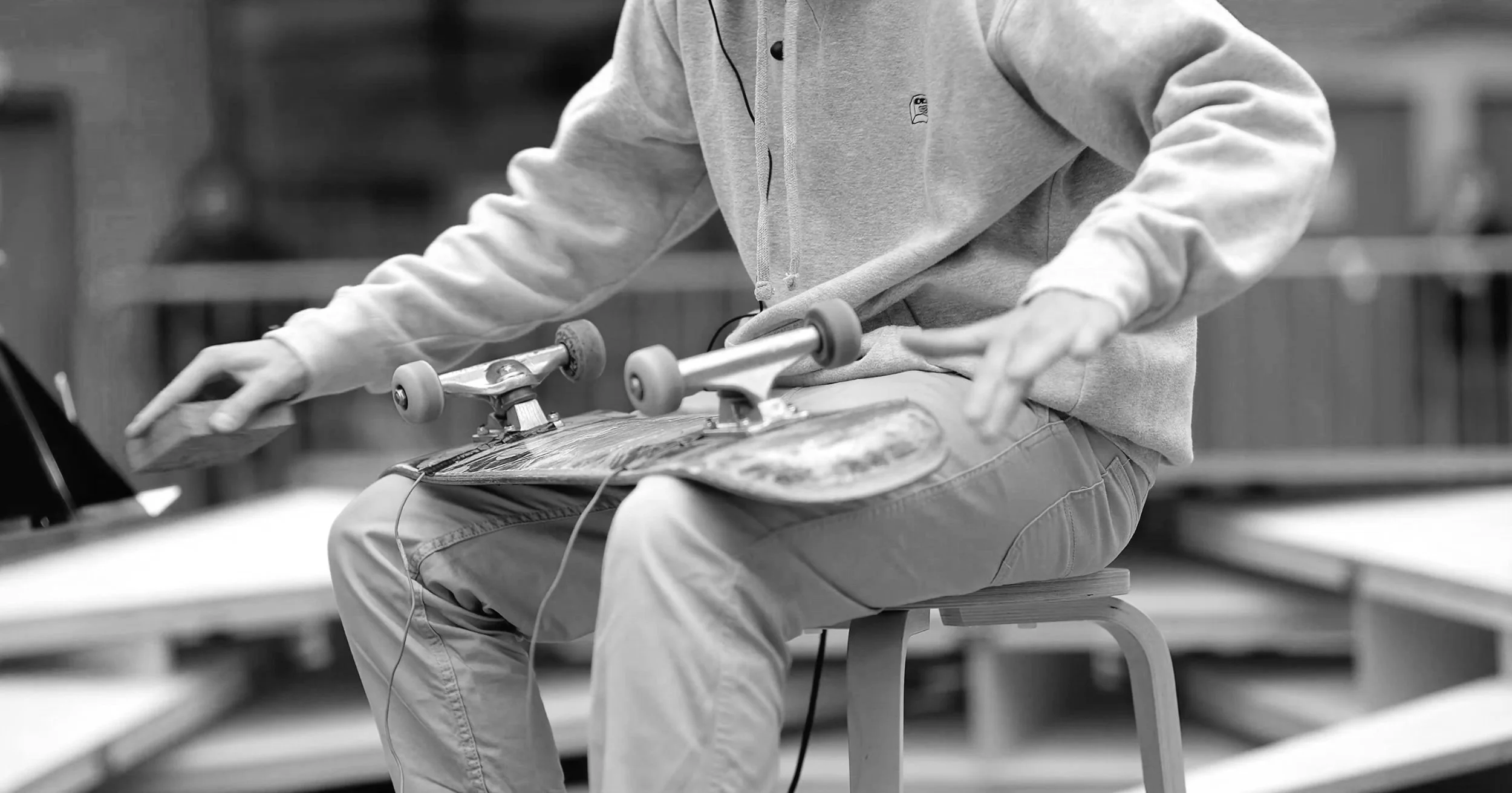
A hypnotic, nocturnal journey through the streets leads us to secrets that we find only if we are open to them. As a composer and skateboarder, it took me many years to unearth a way to authenticlally blend the two together. Grey Area is the fruit of a collaboration between friends, an exploration of the crossroads linking contemporary music and the essence of street skateboarding, through exploration, discovery and a random nocturnal wandering of the streets. (Blending the worlds of street skateboarding and contemporary music. "A hypnotic journey" - Musica Nova Festival. The only sounds in this piece/film are produced by instruments). Released by Crash Ensemble.
[More Info]
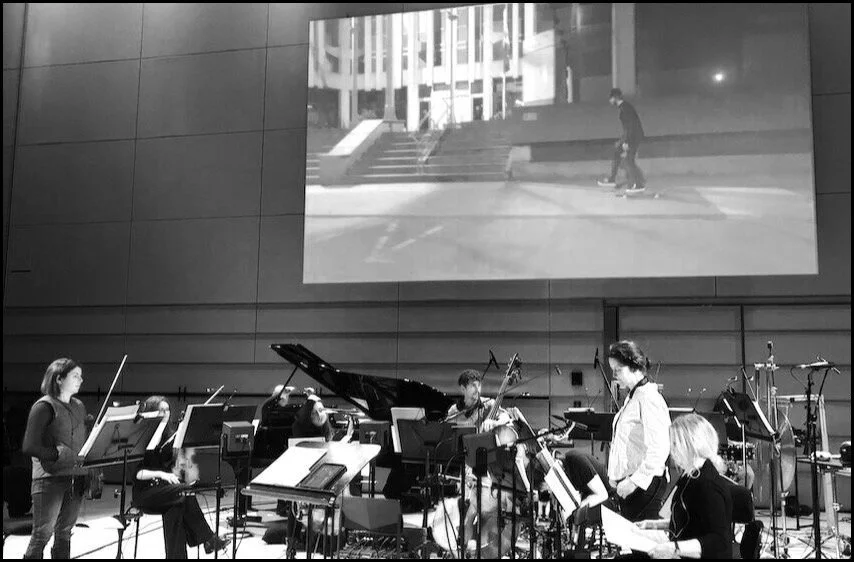
Crash Ensemble perform Sam Perkin’s “Grey Area” at Musica Nova Festival, Helsinki
DISCORD
With Violinist Larissa O’Grady
(2021)
Instrumentation
Violin and Skateboard (Live) with Audio Track and Skateboarding Sounds
Duration
10 Min
Commissioned By
Larissa O’Grady (With Live Sculpture Artist: Alex Pentek)
[More Info]
Supported By
Dublin City Council
STRING QUARTET NO. 2
”Pause”
(2016)
Instrumentation
String Quartet and Slowed-Down Irish Fiddle
Duration
11 min
Commissioned By
Ortús Chamber Music Festival, The Arts Council of Ireland
Performed By
Mairéad Hickey, Siobhán Doyle, Martin Moriarty, Sinéad O’Halloran

About
”Pause” is a meditative work that was written especially for The Ortús Chamber Music Festival 2016 and is dedicated to Thomas Kent. It is scored for String Quartet, Audio (Slowed-Down Irish Fiddle), Voice & Audience. The audio part is created entirely from a recording of violinist Mairéad Hickey performing “The Foggy Dew” on the fiddle. This traditional Irish song was written after the events of The 1916 Rising. I asked Mairéad to record this song on the fiddle in order to slow down the recording, and to slow it down a great deal - by around 800%. When this is done, a sound with staggering beauty emerges in the air, it has a depth that is hard to put into words. In the work we hear this slowed-down fiddle blend with the live String Quartet. The role of the quartet changes from synchronisation, to interaction, to fully liberated, throughout the piece. The result is one which lets the listener slow down - to pause for a moment - to reflect. Different people reflect on different things. One person might think about the events of The 1916 Rising, another might think about how far we have come in the 100 years since, and yet another might notice how similar the sounds of the traditional Irish fiddle are to those of trains in the distance. This is the ever-remarkable magic of music. Funded by Cork County Council as part of the Ireland 2016 Initiative.
NESTING DOLL
With Finghin Collins
(2015)
Instrumentation
Solo Piano (Finghin Collins)
Duration
7 min
Commissioned By
New Ross Piano Festival
Supported By
The Arts Council of Ireland